
Introduction
Playing sports and engaging in physical activities are great for overall health, but they also come with risks of injuries. Among the most common sports-related injuries are ligament and tendon injuries, as well as sprains and strains. These injuries can range from mild discomfort to severe damage requiring medical intervention.
Understanding Ligament & Tendon Injuries
What Are Ligaments and Tendons?
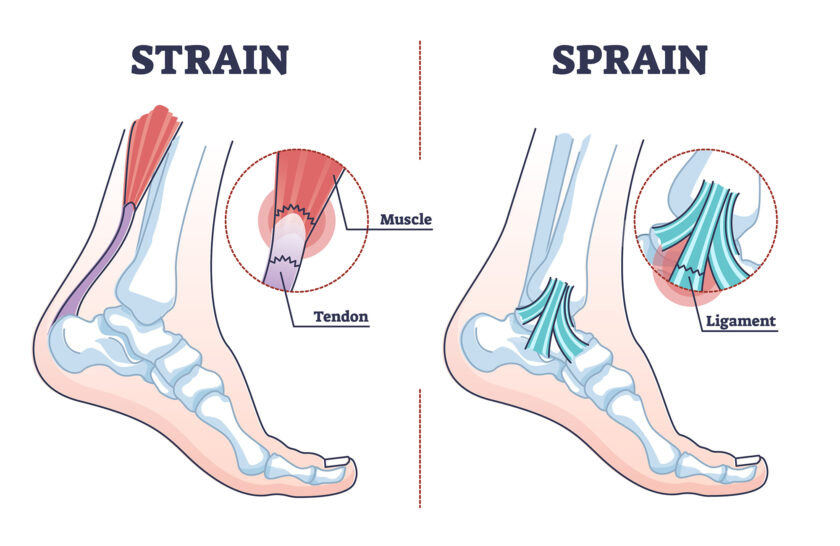
- Ligaments: Tough, fibrous tissues that connect bones to other bones, stabilizing joints.
- Tendons: Fibrous tissues that attach muscles to bones, enabling movement.
How Do Ligament and Tendon Injuries Occur?
- Sudden twisting or excessive force (e.g., ACL tears in football or basketball).
- Repetitive motion injuries (e.g., tennis elbow or Achilles tendonitis).
Difference Between Ligament & Tendon Injuries
- Ligament injuries (sprains) occur due to overstretching or tearing, common in the ankle, knee, and wrist.
- Tendon injuries (strains or tendonitis) involve overstretching or inflammation, often affecting the Achilles tendon, rotator cuff, or hamstrings.
Types of Sports Injuries
Sprains (Ligament Injuries)
- What is a sprain? A sprain occurs when ligaments are overstretched or torn due to a sudden movement.
- Common sprains:
- Ankle sprain (twisting the ankle in sports like soccer or basketball)
- Wrist sprain (falling on an outstretched hand)
Strains (Muscle & Tendon Injuries)
- What is a strain? A strain happens when muscles or tendons are stretched or torn.
- Common strains:
- Hamstring strain (common in sprinting)
- Lower back strain (lifting heavy weights incorrectly)
Tendonitis (Inflammation of Tendons)
- What is tendonitis? Inflammation of a tendon due to overuse.
- Common tendonitis injuries:
- Tennis elbow (overuse of forearm muscles)
- Achilles tendonitis (running injuries)
Torn Ligaments & Tendons
- Severe injuries like ACL tears or rotator cuff tears require surgery and long rehabilitation.
Common Causes of Sports Injuries
- Sudden impact or falls (e.g., tackling in football).
- Overuse injuries (e.g., repetitive swinging in tennis or cricket).
- Improper warm-up and stretching before intense activity.
- Wearing incorrect footwear leading to poor shock absorption.
Symptoms of Ligament & Tendon Injuries, Sprains, and Strains
- Pain and tenderness
- Swelling and bruising
- Stiffness and limited range of motion
- Instability in joints (e.g., knee giving way after an ACL tear)
Diagnosis & Medical Evaluation
Doctors diagnose sports injuries using:
- Physical examination to assess swelling and movement.
- Imaging tests (MRI for soft tissue damage, X-ray for fractures).
Treatment for Sports Injuries
First Aid: R.I.C.E. Method
- Rest: Avoid activities that cause pain.
- Ice: Apply ice packs to reduce swelling.
- Compression: Use bandages to minimize swelling.
- Elevation: Keep the injured area elevated.
Physical Therapy & Rehabilitation
- Strengthening exercises for recovery.
- Massage therapy for improved blood circulation.
Medications & Surgery
- NSAIDs like ibuprofen for pain relief.
- Surgery for severe ligament tears (e.g., ACL reconstruction).
Prevention of Sports Injuries
- Proper warm-up and cool-down before and after workouts.
- Strength training and flexibility exercises for joint stability.
- Using the right protective gear (e.g., knee braces, helmets).
- Maintaining hydration and proper diet for muscle recovery.
Recovery & Rehabilitation Tips
- Recovery time varies:
- Minor sprains heal in 1-2 weeks.
- Severe ligament tears may take 6+ months.
- Follow a structured rehabilitation plan before resuming sports.
Conclusion
Sports injuries like ligament and tendon injuries, sprains, and strains are common but preventable with proper techniques. Early diagnosis and treatment can ensure a faster recovery and long-term mobility. If you experience persistent pain, consult a sports medicine specialist for the best recovery plan.

Leave a Reply