
Introduction
Kidney stones, medically known as nephrolithiasis, are solid mineral and salt deposits that form inside the kidneys. They can cause severe pain and discomfort, affecting millions of people worldwide. In this guide, we will explore the causes, symptoms, treatment options, and preventive measures for kidney stones.
What Are Kidney Stones?
Kidney stones are hard deposits of minerals and salts that form in the kidneys when urine becomes concentrated. These stones vary in size and may travel through the urinary tract, causing pain and potential complications.
Types of Kidney Stones
- Calcium oxalate or calcium phosphate stones are the most prevalent type.
- Struvite Stones – Typically caused by infections, these stones grow quickly and can become large.
- Uric Acid Stones – More common in people with gout or those consuming a high-protein diet.
- Cystine Stones – A rare type caused by a hereditary disorder that leads to excess cystine in urine.
Causes of Kidney Stones
Several factors contribute to the formation of kidney stones, including:
- Dehydration – Low water intake leads to concentrated urine, increasing the risk of stone formation.
- Dietary Choices – High consumption of oxalate-rich foods (e.g., spinach, nuts, and chocolate), excessive sodium, and protein can contribute to stone formation.
- Obesity – Increased body weight is linked to a higher risk of kidney stones.
- Genetics – A family history of kidney stones raises the likelihood of developing them.
- Medical Conditions – Conditions such as urinary tract infections (UTIs), gout, hyperparathyroidism, and metabolic disorders can promote stone formation.
- Certain Medications – Some diuretics, calcium-based antacids, and high doses of vitamin C can increase the risk.
Symptoms of Kidney Stones
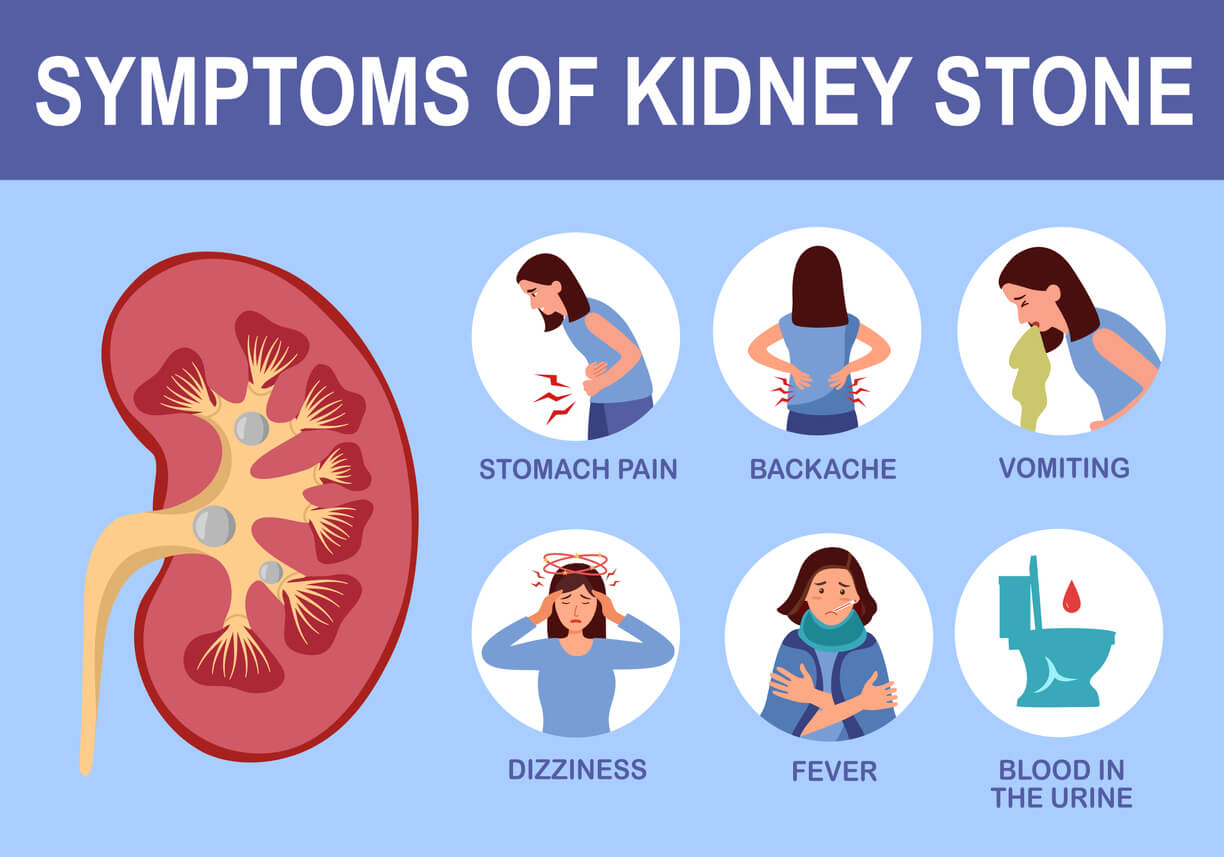
Kidney stones often do not show symptoms until they start moving through the urinary tract. Common symptoms include:
- Severe pain in the back, side, lower abdomen, or groin
- Painful urination
- Frequent urge to urinate
- Blood in the urine (hematuria)
- Nausea and vomiting
- Fever and chills (if an infection is present)
Diagnosis of Kidney Stones
To diagnose kidney stones, doctors may use the following tests:
- Urinalysis – Checks for blood, infection, or mineral crystals in urine.
- Blood Tests – Identifies underlying conditions that contribute to stone formation.
- Imaging Tests – X-rays, ultrasounds, or CT scans detect the presence and location of stones.
- Stone Analysis – If a stone is passed, it can be analyzed to determine its type and cause.
Treatment Options for Kidney Stones
Treatment depends on the size and type of kidney stone:
- Increased Water Intake – Drinking plenty of fluids (2-3 liters daily) helps flush out small stones.
- Pain Relief – Over-the-counter pain relievers like ibuprofen or acetaminophen can manage discomfort.
- Medications – Alpha-blockers can help relax the urinary tract, making it easier for the stone to pass.
Large or Complicated Kidney Stones
- Extracorporeal Shock Wave Lithotripsy (ESWL) – Uses sound waves to break stones into smaller pieces for easier passage.
- Ureteroscopy – A thin scope is inserted into the urethra to remove or break up stones.
- Percutaneous Nephrolithotomy (PCNL) – A surgical procedure used for large stones that cannot pass naturally.
- Medication for Specific Stones – Uric acid stones can sometimes be dissolved with medication that lowers acidity in urine.
Prevention of Kidney Stones
To reduce the risk of kidney stones, follow these preventive measures:
Stay Hydrated
- Drink at least 2-3 liters of water daily to keep urine diluted and prevent mineral buildup.
Eat a Balanced Diet
- Reduce intake of high-oxalate foods like spinach, beets, nuts, and tea.
- Lower sodium intake, as excess salt can lead to calcium buildup in the urine.
- Include citrus fruits like lemons and oranges, which help prevent stone formation.
Maintain a Healthy Weight
- Obesity increases the risk of kidney stones, so maintaining a healthy weight is crucial.
Monitor Calcium and Protein Intake
- Moderate calcium intake is essential; too much or too little can contribute to kidney stones.
- Reduce animal protein consumption, as it can increase uric acid levels.
Regular Medical Checkups
- If you have a history of kidney stones, regular checkups and urine tests can help prevent recurrence.
Conclusion
Kidney stones are a painful yet preventable condition. By maintaining proper hydration, a balanced diet, and a healthy lifestyle, you can reduce your risk of developing kidney stones. If you experience severe symptoms, seek medical attention promptly to prevent complications.

Leave a Reply