
Introduction
Bladder cancer is one of the most common cancers, affecting thousands of people worldwide. It begins in the bladder cells and can spread without treatment. Early detection and improved management can be made easier with a better understanding of the risk factors, symptoms, and available treatments. In-depth insights into bladder cancer, particularly in the Indian context, will be provided in this blog.
What is Bladder Cancer?
Bladder cancer occurs when abnormal cells grow uncontrollably in the bladder. Urothelial carcinoma, which affects the cells that line the inside of the bladder, is the most prevalent type. Other types include squamous cell carcinoma and adenocarcinoma.
Types of Bladder Cancer
- The most common type is urothelial carcinoma, also known as transitional cell carcinoma. Squamous Cell Carcinoma – Usually caused by chronic infections or irritation.
- Adenocarcinoma – A rare type that originates in mucus-producing glands.
Risk Factors and Causes of Bladder Cancer Several factors can increase the risk of developing bladder cancer:
- Smoking: The leading cause, as harmful chemicals accumulate in urine.
- Exposure to Chemicals: Industrial chemicals, dyes, and arsenic in water.
- Chronic Bladder Infections: Recurrent infections may lead to cell changes.
- Age and Gender: More common in older adults and men.
- Genetic Factors: A family history of bladder cancer increases risk.
- Radiation and Chemotherapy: Prior treatments for other cancers.
Symptoms of Bladder Cancer
- Bladder cancer symptoms may include:
- Blood in urine (hematuria), which may appear pink, red, or cola-colored.
- Frequent urination and urgency.
- During urination, pain or a burning sensation. Lower back pain or pelvic discomfort.
How is Bladder Cancer Diagnosed?
- Urinalysis and Urine Cytology: Detects abnormal cells.
- Cystoscopy: A small camera examines the bladder lining.
- Biopsy: Tissue sample analysis to confirm cancer.
- Imaging Tests: CT scan, MRI, or ultrasound to detect tumor size and spread.
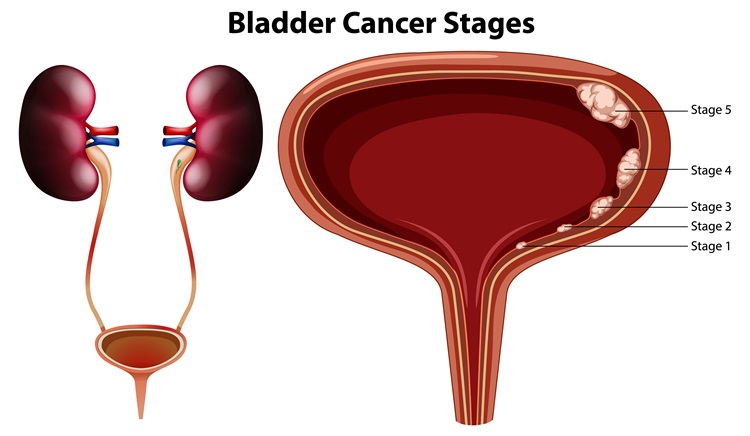
Stages of Bladder Cancer
There are stages of bladder cancer: Stage 0: Only the bladder lining is affected by cancer. Stage I: Cancer has spread into the bladder wall.
- Stage II: Cancer reaches the muscle layer of the bladder.
- Stage III: Cancer extends to nearby tissues or organs.
- Stage IV: Cancer has spread to distant organs (metastasis).
Treatment Options for Bladder Cancer
- Surgery
Transurethral Resection (TURBT): Removes tumors in early stages.
In severe cases, radical cystectomy involves removing the entire bladder. Partially removing the bladder is called a partial cystectomy.
2. Chemotherapy
Used before or after surgery to destroy cancer cells.
Can be administered via IV or directly into the bladder (intravesical chemotherapy).
3.Immunotherapy
BCG Therapy: A bacteria-based treatment that boosts the immune response.
Drugs like Atezolizumab, a checkpoint inhibitor, aid the immune system in its fight against cancer.
4. Radiation Therapy
- High-energy beams target and kill cancer cells.
- Often used when surgery isn’t an option.
- Preventing Cancer of the Bladder Quit smoking to reduce risk.
- Avoid exposure to industrial chemicals.
- Keep hydrated by drinking a lot of water. Maintain a healthy diet rich in fruits and vegetables.
routine medical examinations, particularly if there is a family history. Bladder Cancer in India: Statistics and Challenges
- Rising Cases: Urban pollution and industrial exposure increase risk.
- Late Diagnosis: Many cases are detected in advanced stages due to lack of awareness.
- Treatment Costs: Advanced treatments can be expensive, but government schemes help.
- Awareness is necessary because regular screenings can increase survival rates.
Conclusion
Bladder cancer is a serious condition but can be treated successfully if detected early. Awareness, lifestyle changes, and medical advancements play a crucial role in combating this disease. If you experience symptoms, consult a doctor immediately for timely diagnosis and treatment.

Leave a Reply