
Introduction
Alopecia, commonly known as hair loss, is a condition that affects millions of people worldwide. It can occur due to various reasons, including genetics, hormonal changes, medical conditions, and lifestyle factors. While hair loss can be distressing, understanding its causes and available treatments can help manage and even prevent it.
Types of Alopecia
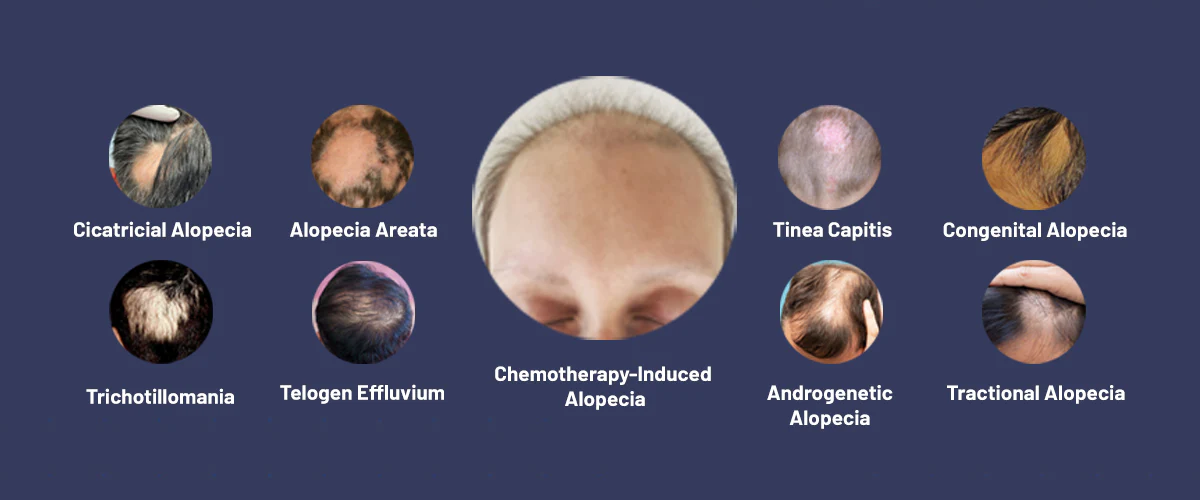
Androgenetic Alopecia (Male & Female Pattern Baldness)
- The most common type of hair loss.
- Genetic predisposition plays a significant role.
- Typically presents as a receding hairline and thinning crown in men.
- In women, it leads to overall thinning without complete baldness.
Alopecia Areata
- An autoimmune disorder where the immune system attacks hair follicles.
- Leads to sudden hair loss in small, round patches.
- Can progress to total scalp hair loss (Alopecia Totalis) or complete body hair loss (Alopecia Universalis).
Telogen Effluvium
- Temporary hair loss triggered by stress, illness, or hormonal imbalances.
- Common causes include childbirth, surgery, severe illness, or nutritional deficiencies.
- Hair regrows once the triggering factor is resolved.
Traction Alopecia
- Caused by excessive pulling or tension on the hair due to tight hairstyles (e.g., ponytails, braids, and weaves).
- Preventable by adopting gentler hair care practices.
Scarring Alopecia (Cicatricial Alopecia)
- A rare condition where inflammation damages hair follicles permanently.
- Common in conditions like lichen planopilaris and frontal fibrosing alopecia.
Causes of Alopecia
Genetic Factors
- Family history plays a crucial role in androgenetic alopecia.
Hormonal Imbalances
- Thyroid disorders, polycystic ovary syndrome (PCOS), and menopause can trigger hair loss.
Nutritional Deficiencies
- Lack of essential nutrients like iron, vitamin D, biotin, and zinc contributes to hair thinning.
Autoimmune Disorders
- Conditions such as lupus and alopecia areata cause the immune system to attack hair follicles.
Stress and Lifestyle Factors
- Chronic stress, poor diet, and smoking can accelerate hair loss.
Medications and Treatments
- Certain drugs for chemotherapy, blood pressure, and depression may cause temporary hair loss.
Effective Treatments for Alopecia
Medical Treatments
- Minoxidil (Rogaine): A topical treatment that stimulates hair growth.
- Finasteride (Propecia): An oral medication for male pattern baldness.
- Corticosteroids: Used for autoimmune-related hair loss.
- Platelet-Rich Plasma (PRP) Therapy: Involves injecting platelet-rich plasma into the scalp to stimulate growth.
Natural Remedies and Lifestyle Changes
- A balanced diet rich in vitamins and minerals supports hair growth.
- Essential oils like rosemary and peppermint oil promote scalp health.
- Scalp massages improve blood circulation and strengthen hair follicles.
Hair Transplant Surgery
- A permanent solution for severe hair loss cases.
- Follicular Unit Transplantation (FUT) and Follicular Unit Extraction (FUE) are popular techniques.
- Useful for individuals experiencing severe or permanent hair loss.
Prevention Tips for Hair Loss
- Maintain a healthy diet rich in protein, vitamins, and minerals.
- Avoid tight hairstyles that put stress on hair follicles.
- Reduce heat styling and chemical treatments.
- Manage stress through exercise, meditation, and sufficient sleep.
- Use mild, sulfate-free shampoos and conditioners.
Conclusion
Alopecia can be a challenging condition, but with the right approach, it is manageable. Understanding the causes, exploring treatment options, and adopting preventive measures can significantly improve hair health. If you’re experiencing excessive hair loss, consulting a dermatologist can help determine the best course of action tailored to your needs.

Leave a Reply